
View Article
BLOG
The Power of Personas in Modern Digital Strategy
Most businesses have always understood their audience through broad target markets. Demographics like age ranges, general interests and life stages were once enough to plan campaigns and shape messaging. That approach made sense when digital behaviour was simpler and platform targeting was more predictable. However, the way people search, shop and make decisions online has changed. A modern digital strategy now needs a far deeper understanding of the individuals behind those broad groups.
People interact with brands in fragmented, non-linear and highly personalised ways. Their decisions are influenced by emotion, context, habits, convenience, identity, values and micro-moments. What once looked like one audience segment is now a collection of smaller and more specific behavioural profiles. This is why the work of a digital strategy agency has shifted from defining broad markets to identifying the nuanced motivators that make customers choose one brand over another.
Platforms like Meta and Google have accelerated this shift. Targeting is no longer driven by detailed segmentation rules. It is now influenced heavily by creative signals and behavioural patterns. The algorithm determines who should see your ads based on how your creative speaks to people, not how you define the audience. This change makes one thing clear. Your digital strategy must be built on a deep, human understanding of your customers because broad assumptions no longer guide distribution.
This is where customer personas and journey maps become essential tools. They help you move beyond surface-level descriptors and uncover the specific insights that shape real decisions.
Why the Traditional Target Market Is No Longer Enough
Target markets still have value. They define scale, potential and direction. What they no longer provide is clarity on how customers behave, what they care about, where they show up or why they act.
When you look deeper, the questions that matter most become more precise.
- What is the customer thinking and feeling at each stage of their journey.
- What creates hesitation or doubt.
- What information gives reassurance.
- Which platforms feel natural to them and why.
- What emotional outcome they are seeking when they make a choice.
- What role convenience, trust, aesthetics, speed or identity plays.
These questions shape creative, messaging, user experience and conversion pathways. They are also the questions many brands cannot answer without structured work. Even organisations with decades of experience often realise they have never documented these details. A digital strategy company can help uncover and organise them, but their value ultimately lies in how they guide every part of your digital strategy marketing.
What Modern Personas Look Like
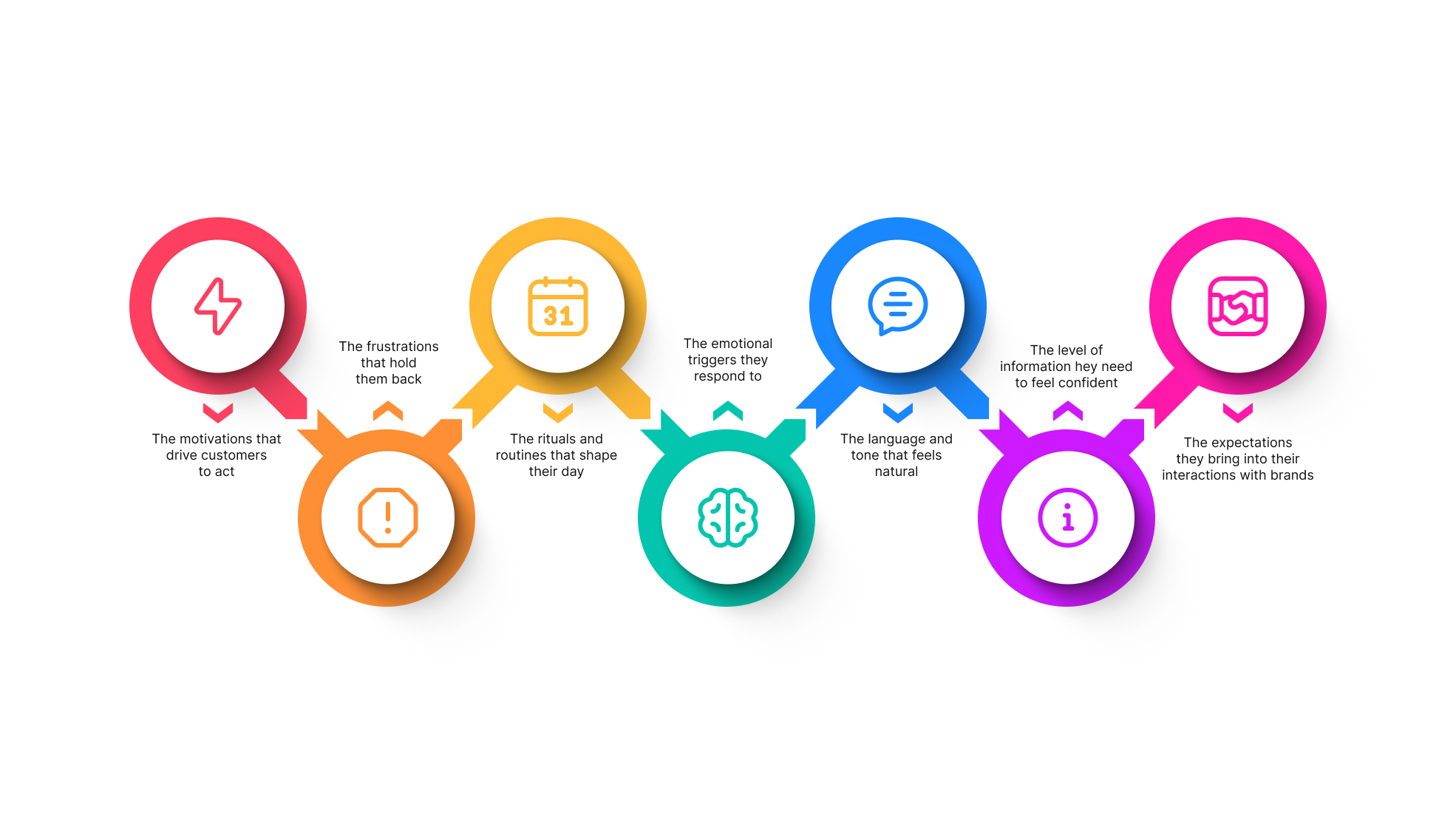
Modern personas go beyond simple profiles. They describe the underlying factors that influence how a customer behaves, decides and interacts with your brand. Strong personas identify:
- the motivations that drive customers to act
- the frustrations that hold them back
- the rituals and routines that shape their day
- the emotional triggers they respond to
- the language and tone that feels natural
- the level of information they need to feel confident
- the expectations they bring into their interactions with brands
They also consider context. Someone buying for their household needs different information than someone purchasing for work. A customer shopping under time pressure behaves differently from one browsing casually. Personas help you see these nuances clearly so your digital strategy becomes more precise and effective.
The strongest personas are built from real behavioural observations, not assumptions. They reflect patterns across shopping behaviour, preferred channels, trust signals, content preferences, friction points and visual expectations. These are the insights that elevate a digital strategy from broad to strategic.
Why Journey Maps Matter Just as Much
If personas describe who your customers are, journey maps explain how they move. A journey map outlines the stages a customer passes through, from first discovering your brand to deciding whether or not to convert. It highlights:
- the stages of awareness, consideration and decision
- the actions taken at each point
- the questions people ask along the way
- the moments where friction or confusion appears
- where trust increases and decreases
- the emotions that influence decisions
- the opportunities to support or reassure them at the right time
Journey maps help you understand the full experience from the customer’s perspective. They reveal details that are easy for brands to overlook, such as when customers become uncertain, when information is missing, or when additional clarity would prevent them from dropping off.
These insights allow a digital marketing strategy agency to design experiences that feel intuitive and supportive. By addressing the emotions, questions and behaviours that appear at each stage, brands can build digital experiences that guide customers confidently from discovery to conversion.
How Personas Strengthen Modern Digital Strategy
More Relevant Messaging
When you understand what your customers need to hear at each moment, your messaging becomes sharper and more persuasive. Instead of broad statements, you speak directly to specific motivations and expectations.
Creative That Works With the Algorithm
Creatives become far more effective when they reflect real customer desires, concerns and tone. If Meta now distributes content based on creative signals, you need creative that genuinely reflects the behaviours of the people you want to reach.
UX Decisions That Remove Friction
Journey maps highlight uncertainties that cause drop-off. When you know what frustrates or confuses your customers, you can fix those issues before they become barriers.
More Efficient Spend
Campaigns become more cost-effective because your creative signals are aligned to the audience you want to attract. This allows algorithms to identify similar people more accurately.
Consistency Across Departments
Personas help marketing, sales, design, content and customer service teams understand the same customer in the same way. This creates a unified digital strategy built around shared insight.
The Competitive Advantage Is in the Golden Nuggets
Inside every audience segment, there are small insights that shape behaviour in big ways. These are the golden nuggets. They might be something emotional, something practical or something entirely unexpected. When uncovered, they influence creative decisions, landing page structure, messaging hierarchy, automation, social content and even product strategy.
They help your digital strategy agency move from “we think this is what customers want” to “we know this is how they actually behave.”
Brands that uncover these nuggets build stronger connections, reduce friction and create digital experiences that feel intuitive. They also spend their marketing budget more effectively because their creative resonates with the people most likely to convert.
Conclusion: Understand the Person, Not Just the Profile
The shift in digital behaviour has made it clear that broad audience definitions are no longer enough. A modern digital strategy requires a closer look into the emotions, behaviours and moments that shape how customers choose. Personas and journey maps turn these insights into practical, usable tools that influence every part of your digital presence.
If you want a digital strategy that feels more accurate, more human and more effective, the path starts with understanding your customers on a deeper level. Not just who they are on paper, but who they are when they are making decisions.
A strong digital strategy agency builds from this foundation. A stronger brand does too.
If you are interested in developing your strategy further or creating personas and journey maps, contact Intale and we can help you shape the next stage of your digital growth.